

Amsterdam data center protest: the European backlash and what project teams should prepare
The Amsterdam data center protest on Friday 7 November 2026, when more than 100 people entered a Microsoft construction site, opened a weekend of Stop Dirty Data Centres actions in more than a dozen European countries. The coalition wants a moratorium on large projects, published energy and water figures and real consultation. Project teams should expect planning boards to ask for the same.
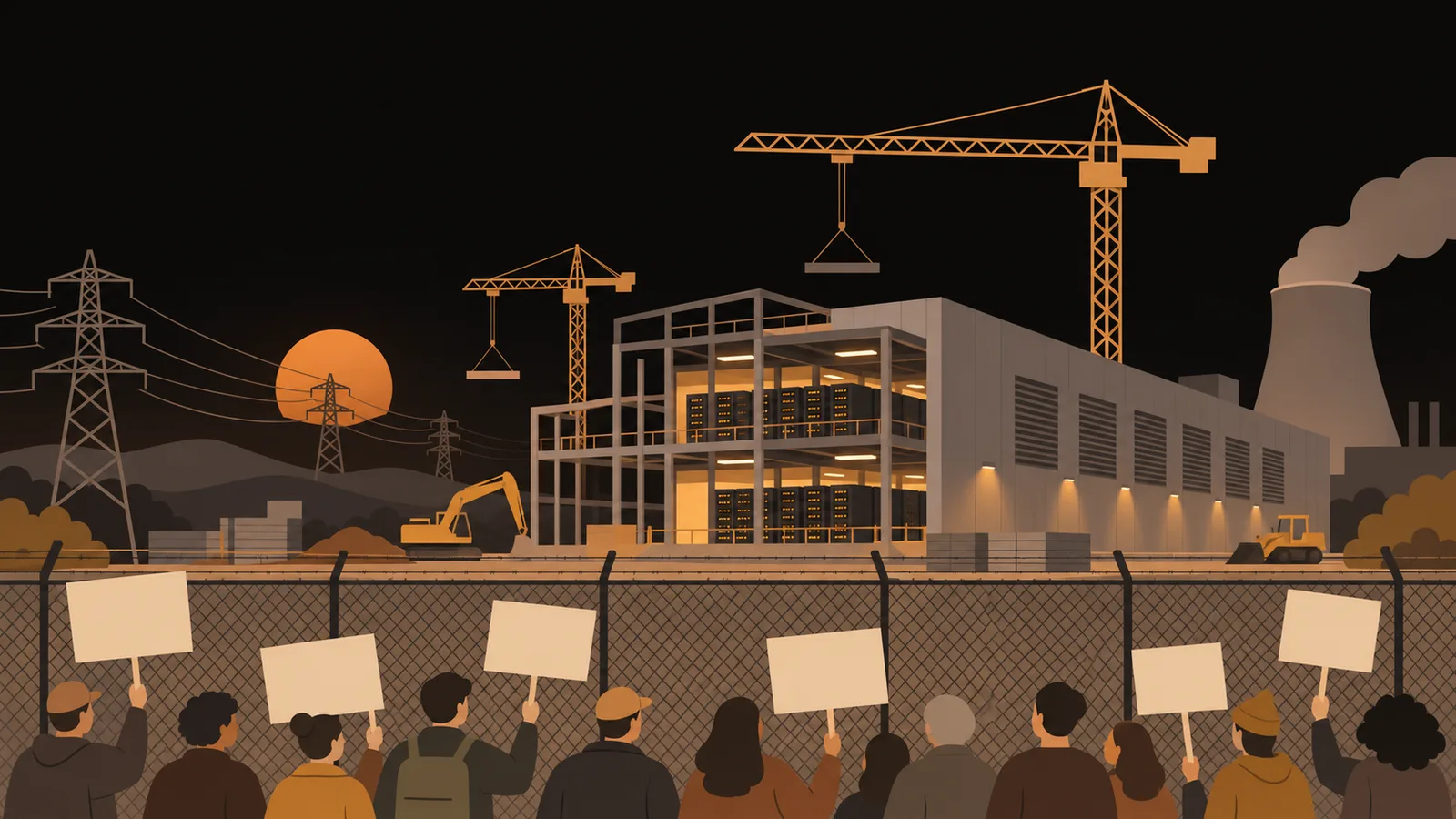
The Amsterdam data center protest on Friday 7 November 2026, when more than 100 people entered a Microsoft construction site, opened a weekend of Stop Dirty Data Centres actions in more than a dozen European countries. The coalition wants a moratorium on large projects, published energy and water figures and real consultation. Project teams should expect planning boards to ask for the same.
1. What happened over the weekend
Democracy Now reported that over 100 protesters broke into the construction site of a Microsoft data center on the outskirts of Amsterdam on Friday. Bloomberg, in a story carried by Insurance Journal on 9 November 2026, described hundreds of protesters clashing with police at the site, with one arrest. The Digital Watch Observatory reported police intervention and about 150 to 200 detentions. The counts differ, so treat any single figure with care.
Amsterdam was the first of many actions. Democracy Now counted 16 countries over the weekend; Digital Watch listed 14, including Austria, Belgium, Croatia, Denmark, Finland, France, Germany, Ireland, Italy, the Netherlands, Poland, Portugal, Spain and the United Kingdom.
Some of the larger gatherings:
- Dublin: some 2,000 people marched, according to broadcaster RTE as cited by Bloomberg.
- Helsinki: about 1,300 people gathered and marched to Google’s offices and to parliament, YLE reported, with smaller demonstrations in other Finnish towns.
- Denmark: Digital Watch reported demonstrations at Microsoft data centers in Lille Skensved, Køge and Greve.
- Warsaw: protesters gathered outside parliament asking for stronger regulation and a pause in permit applications for hyperscale facilities, per Digital Watch.
The pattern looks like the US, where data centers became an issue in the 3 November midterms and in local ballot measures in Ohio.
2. What the coalition is asking for
Stop Dirty Data Centres describes itself as a coalition of local democracy and climate groups. Bloomberg quoted its aim to “halt the unchecked expansion of AI data centers”. Digital Watch says the demonstrations brought together residents, environmental groups, trade unions and political representatives.
Their demands, as Digital Watch summarises them:
- a temporary pause on new large-scale projects until environmental and social impacts have been assessed
- mandatory disclosure of each project’s resource requirements
- environmental assessments
- meaningful consultation with affected communities
The concerns behind them are electricity and water use, pressure on local infrastructure, land use, environmental damage, limited jobs and who gets the economic benefit.
3. Why Ireland and Finland are the pressure points
Ireland became one of Europe’s biggest data center hubs on investment from Microsoft, Amazon and Google. Data centers used 23% of Ireland’s total metered electricity in 2025, according to the official statistics agency as cited by Bloomberg. Digital Watch notes the share was 5% in 2015.
Finland is the newer case. Google announced in September its largest European investment, €13 billion, to expand an existing data center in Finland and build two new ones, Bloomberg reported. The Confederation of Finnish Industries counts about €80 billion of data center projects in planning or construction there.
Bloomberg also reported that public mood turned after it emerged that woodland was cleared, topsoil stripped and roads built at one site before the environmental impact assessment was finished. The company building that site faces a criminal inquiry, and the government is preparing legislation to rein in the expansion. We covered the earlier halt in our guide to the Google data center Finland stoppage at Muhos and Kajaani.
4. The EU Cloud and AI Development Act
The protests land on top of a policy push in the other direction. The European Commission presented the Cloud and AI Development Act proposal in June 2026. Digital Watch says it aims to at least triple EU data center capacity within five to seven years and to simplify permitting.
The same proposal carries sustainability provisions: more transparency on energy and water consumption, better cooling and power management, and renewable energy in data center operations. The disclosure the protesters demand is therefore already on the regulatory agenda. A site that publishes its numbers early is ahead of that rule.
5. What to prepare before the planning board asks
This list is our advice; none of it is a legal requirement. It is the pack we would want ready before filing:
- Power figures in plain terms: requested grid capacity, expected average draw and the phasing, with the substation and grid work it depends on. Our rack power capacity planning guide covers how to build the number from the rack up.
- Water figures by season, the cooling design behind them and the water source. The range is wide; see AI data center water use per day for what drives it.
- A heat reuse answer. Digital Watch lists recovering waste heat for local heating networks among the measures that could ease the conflict. Even a “not feasible here, and here is why” is better than silence.
- A clean sequence on site. The Finnish case shows what happens when ground work runs ahead of the environmental assessment. Do nothing on the land before the approvals allow it.
- Consultation that starts early, with layouts, noise, traffic and construction phasing shown to neighbours before the application is final.
- A concrete local benefit statement: jobs during and after construction, tax and any infrastructure the project pays for. Protesters point to limited jobs, so vague promises will not hold.
None of this guarantees a permit. It does remove the easiest objections, and it matches what the EU proposal is likely to ask for anyway.
What happened at the Amsterdam data center protest?
On 7 November 2026 protesters entered a Microsoft data center construction site on the outskirts of Amsterdam. Democracy Now put the number above 100; Bloomberg reported hundreds clashing with police and one arrest; Digital Watch reported about 150 to 200 detentions.
What do the Stop Dirty Data Centres protesters want?
A moratorium on large data center construction until environmental and social impacts are assessed, mandatory disclosure of resource needs, environmental assessments and proper consultation with affected communities.
How many countries joined the data center protests in Europe?
Democracy Now reported actions in 16 countries over the weekend; Digital Watch listed 14, from Ireland and Finland to Poland and Spain.
How much of Ireland's electricity do data centers use?
Data centers used 23% of Ireland's total metered electricity in 2025, according to the official statistics agency as cited by Bloomberg.
What is the EU Cloud and AI Development Act?
A European Commission proposal presented in June 2026 that aims to at least triple EU data center capacity in five to seven years, simplify permitting and require more transparency on energy and water use.
One Excel file. Your room in 3D.
Download the import template (v1.5, twelve sheets, only Devices required) and the filled example from our demo hall. No form, no email needed, no macros in the files.
Fill in the Devices sheet and send it with your walkthrough request; we import it on the call. What each sheet does