

Australia suburban data center ban: what developers know before the draft law
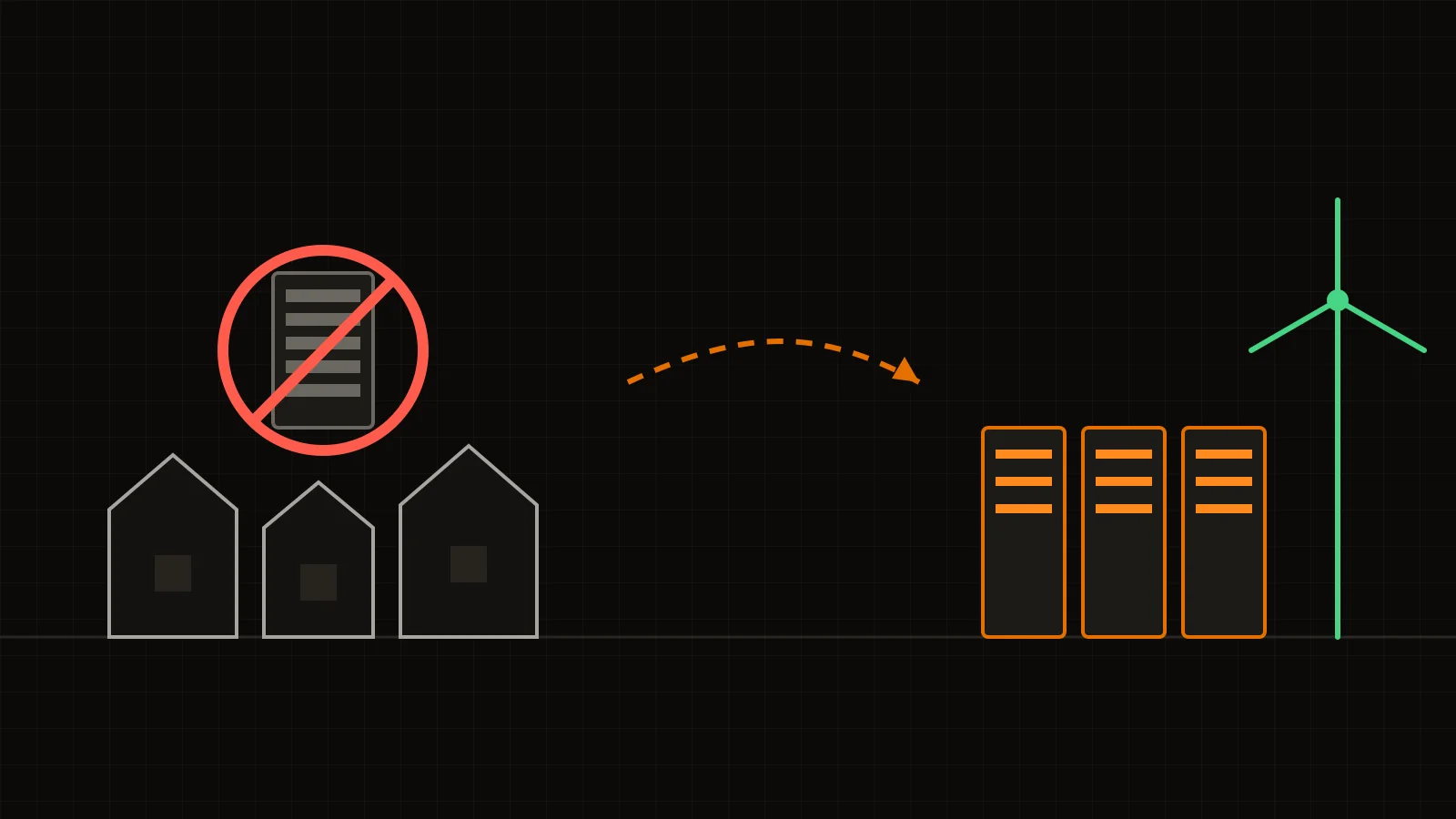
The Australia suburban data center ban is a federal plan, reported by the Australian Financial Review in late October 2026, to stop new data centres in suburban areas as part of wider AI law reform. Draft legislation is due for consultation before the end of 2026. Reports say sites may also need renewable power or risk losing grid access. Location, power and water rules are not yet published.
1. What was reported
The Australia suburban data center ban comes from an Australian Financial Review report carried by Capital Brief on 29 October 2026. It says the Albanese government plans to ban new data centres in suburban Australia as part of wider AI law reform. The report relies on unnamed sources familiar with the policy.
According to Capital Brief, the package would also:
- require data centres to run on renewable energy, with facilities that do not comply facing possible power cuts;
- move AI copyright toward a model where rights holders negotiate directly with AI companies, with smaller creators also able to benefit;
- possibly require AI companies to disclose the content used to train their models.
Grafa reported the same day that the draft legislation will go out for public consultation before the end of the year to set national standards. Grafa says Prime Minister Anthony Albanese pointed to energy, water and location as the issues the rules need to address.
None of this is law. The government has not published a draft, a definition of “suburban” or any thresholds.
2. Why suburban sites became a problem
Both reports tie the plan to local opposition. Capital Brief says Goodman Group abandoned a planned facility in Lane Cove, Sydney, and that community concerns over power lines delayed NEXTDC’s M3 project in Melbourne. Grafa puts the cancelled Goodman project in Sydney at A$1.2 billion and says it was dropped after community backlash.
A metro site may be close to fibre and customers, but the transmission upgrade it needs runs through the same streets, and residents can delay it. The same pattern holds up new capacity in the United States, as our guide to data center power line disputes shows.
3. Victoria already has rules, and councils want a halt
Victoria has moved ahead of Canberra. Bushletter, citing ABC News, reported on 30 October 2026 that the Victorian government last month banned data centres near homes and schools, and that its rules require renewable energy and the use of non-drinking water. A government spokesperson told the outlet that data centres must bring their own energy supply.
Councils want more. The Municipal Association of Victoria, which represents the state’s 79 councils, has asked for a moratorium on approvals of all new or expanded data centres until the state has a full planning and environmental framework, according to Bushletter. A second motion seeks tighter regulation of data centres’ use of land, energy and water. Eight councils brought data centre motions to the association’s October meeting, including Melbourne, Geelong, Maribyrnong and Hume.
Councils also object to Victoria’s Development Facilitation Program, which lets data centre projects deemed significant economic development go straight to the planning minister. Association president Jennifer Anderson told the outlet the program is “taking powers away from council and community”.
The Geelong case shows the land conflict. Bushletter reports that NEXTDC bought 169 hectares at Lovely Banks in the Northern Geelong Growth Area this year, on land earmarked for more than 2,000 homes, and is already building a data centre in nearby Corio. The City of Greater Geelong said in a submission that large data centres could delay residential and industrial development.
Bushletter says the government enters caretaker mode next Tuesday, which falls on 3 November 2026, ahead of the November state election. The opposition Coalition says it would keep data centres out of residential areas and green wedges and put them in dedicated precincts. Either way, a precinct model or a buffer from homes looks likely in Victoria.
4. Greenpeace: the problem moves to the regions
Greenpeace Australia Pacific says a suburban ban is not enough. In a statement on 30 October 2026, Joe Rafalowicz, its Head of Climate and Energy, said the ban would push the problem to regional Australia, where proposals are moving to areas that are “more water-scarce, more environmentally sensitive”.
Greenpeace also says some proposed regional sites sit next to fracked and coal seam gas sources to support their own gas-fired power. It names projects in the Beetaloo Basin in the Northern Territory and the Western Downs in Queensland, and says communities such as Berry Springs and Dalby do not want them. It is calling for a moratorium on AI data centre developments until enforceable safeguards are in place.
For developers, this is a signal that regional sites will face their own scrutiny, especially if the power plan relies on gas rather than renewables.
5. What is known and what is still open
Known, from the reports above:
- The federal government plans to ban new data centres in suburban areas, according to the AFR report carried by Capital Brief.
- Draft legislation is due for public consultation before the end of 2026, according to Grafa and Capital Brief.
- Renewable energy is expected to be a condition, with loss of power access as the reported penalty.
- Victoria already bans data centres near homes and schools and requires renewable energy and non-drinking water, according to Bushletter.
Still open until the draft is published:
- How “suburban” is defined: by zoning, distance from homes, or something else.
- Whether approved or existing sites are grandfathered, and whether expansions count as new.
- What share of renewable supply is required, how it is measured, and by when.
- Whether on-site gas generation is allowed as a bridge.
- Whether water rules are national or left to the states.
- How federal rules sit alongside state planning schemes such as Victoria’s.
6. What it means for siting, power and density planning
These planning steps follow from the reports above.
- Screen your pipeline for suburban exposure. List every Australian site in planning or design that sits near residential zoning. Assume the draft could affect those sites until it says otherwise.
- Look at industrial and precinct land first. Victoria’s Coalition already proposes dedicated precincts, and the Victorian government bans sites near homes and schools. Land zoned for heavy use away from housing is the lower-risk option under both.
- Treat renewable supply as part of the power plan from day one. If grid access can be cut for non-compliance, the contracted renewable supply sets how many megawatts you can count on. Size the IT load to that figure, even if the grid connection is larger.
- Plan density against land and power together. Regional and precinct sites may offer more land but tighter or slower power. Before you fix the hall layout, work out how many racks the firm renewable supply supports at your target kW per rack. The rack power capacity planning guide covers the method.
- Build water into the cooling choice. Victoria already requires non-drinking water, and Albanese named water as one of the issues. Cooling designs that need little or no water reduce the permitting risk, wherever the site is.
- Expect regional pushback too. Greenpeace’s statement names regional communities and gas-backed projects. Early local engagement and a clear power source will matter outside the suburbs as well.
- Take part in consultation. When the draft is released, developers and operators can comment on definitions, transition periods and how renewable supply is measured.
7. Dates to watch
- 3 November 2026: the Victorian government enters caretaker mode ahead of the November state election, according to Bushletter.
- November 2026: the Victorian state election, where both sides have data centre siting policies, according to Bushletter.
- Before the end of 2026: federal draft legislation on data centre location and AI reform is due for public consultation, according to Grafa and Capital Brief.
Is Australia banning data centres in the suburbs?
The federal government plans to, according to an Australian Financial Review report carried by Capital Brief on 29 October 2026. The report cites unnamed sources and says the ban on new suburban data centres is part of wider AI law reform. Nothing is law yet. Draft legislation is due for public consultation before the end of 2026.
When will the draft data centre law be released?
Grafa reported on 29 October 2026 that the draft will go out for public consultation before the end of the year to set national standards. Capital Brief also says draft laws are expected this year. Neither report gives a release date or a start date for the rules.
Will data centres in Australia have to use renewable energy?
That is what the reports say is planned. Capital Brief reports that data centres could be required to run on renewable energy and that facilities that do not comply could face power cuts. Grafa says data centres that fail to shift to renewables risk losing power access. Thresholds and timelines are not public.
What does the ban mean for existing data centre projects?
The reports do not say whether existing or approved projects are covered. Capital Brief describes the plan as a ban on new data centres. Until the draft is out, operators should treat the definition of suburban, any transition period and any grandfathering as open questions.
Why do Victorian councils want data centre approvals halted?
Bushletter, citing ABC News, reported on 30 October 2026 that the Municipal Association of Victoria wants a moratorium on approvals of new or expanded data centres until the state has a full planning and environmental framework. Councils also object to a state program that lets significant projects go straight to the planning minister.
Does Greenpeace support the suburban data centre ban?
Greenpeace Australia Pacific says it does not go far enough. In a statement on 30 October 2026, Joe Rafalowicz, its Head of Climate and Energy, said a suburban ban would push projects into regional areas that are more water-scarce and environmentally sensitive. Greenpeace wants a moratorium on AI data centre developments until enforceable safeguards are in place.
One Excel file. Your room in 3D.
Download the import template (v1.5, twelve sheets, only Devices required) and the filled example from our demo hall. No form, no email needed, no macros in the files.
Fill in the Devices sheet and send it with your walkthrough request; we import it on the call. What each sheet does